
Views: 0 Author: Site Editor Publish Time: 2025-06-27 Origin: Site


In today’s advanced manufacturing environment, Computer Numerical Control (CNC) machines play an essential role in creating complex and precise parts with unmatched efficiency. Understanding the inner workings of a CNC machine is crucial for engineers, manufacturers, and technical buyers who aim to optimize productivity, accuracy, and longevity of their machining operations.
This comprehensive guide explores the major components that make up a CNC machine, helping engineers better understand how each part contributes to the overall functionality and performance of the system. From the rigid machine frame to the intricate controller system, every component has a unique and important role in CNC precision and automation.
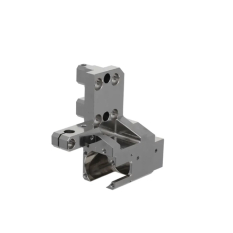
The frame, often referred to as the machine base and column, is the structural foundation of the CNC machine. It supports all other components and provides the necessary rigidity and strength to handle vibrations during machining.
Most CNC machines use cast iron or heavy-duty steel for the frame, as these materials absorb vibrations and maintain accuracy under high loads. A well-built frame is essential for ensuring stability during high-speed operations and is directly tied to the machine's overall precision.
The spindle is the part of the CNC machine responsible for rotating the cutting tool or the workpiece, depending on the machine type. The drive motor powers the spindle, and its performance directly affects machining speed, cutting depth, and finish quality.
Spindles are rated by their maximum speed (RPM), torque, and power. High-speed spindles are ideal for precision machining in aerospace or electronics, while high-torque spindles are preferred in heavy industries like automotive and oilfield manufacturing. Some machines also include cooling systems for the spindle to prevent overheating during long operations.
CNC machines work by moving cutting tools or workpieces along multiple axes. Most machines feature at least three axes: X (left to right), Y (front to back), and Z (up and down). Advanced machines may have up to five or more axes, enabling more complex part geometries and reducing the need for multiple setups.
Each axis is controlled by servo or stepper motors and guided by precision ball screws or linear guides. The movement system also includes feedback devices like encoders to ensure accurate position control. Multi-axis CNC systems enable simultaneous machining of intricate parts, significantly boosting productivity and part quality.
The CNC controller is the “brain” of the machine. It interprets the programmed G-code instructions and sends commands to the drive motors, spindle, and other machine systems.
Modern CNC controllers feature touchscreen displays, intuitive interfaces, and support for USB, Ethernet, and cloud connections. Advanced functions include simulation, error diagnostics, tool wear monitoring, and adaptive control. Popular controller brands include FANUC, Siemens, Mitsubishi, and Heidenhain, known for their reliability and real-time control capabilities.
Tooling refers to the cutting instruments used in CNC machining, such as end mills, drills, taps, and inserts. The selection of tooling directly influences cutting speed, material compatibility, and surface finish.
Many CNC machines are equipped with Automatic Tool Changers (ATC), allowing the machine to switch between different tools without manual input. This greatly reduces downtime and increases machining efficiency. Tool magazines can hold anywhere from a few to several hundred tools, depending on machine configuration.
Workholding devices are used to securely position and hold the workpiece during machining. These systems must be extremely stable to ensure consistent part quality.
Common workholding components include vises, chucks, collets, and custom fixtures. For high-volume production, hydraulic or pneumatic clamping systems may be used to automate the process and reduce setup time.
Proper workholding improves surface finish, accuracy, and cycle time while minimizing vibration and tool wear.
During machining, friction generates heat that can damage tools and affect material integrity. The coolant system delivers cutting fluids to the machining area to reduce heat, lubricate tools, and flush away chips.
There are several coolant delivery methods, including flood coolant, mist, and through-spindle coolant. High-pressure systems are often used in deep-hole drilling or hard-metal cutting to prevent overheating and improve chip evacuation.
A reliable coolant system helps extend tool life and maintain consistent machining conditions, which is especially critical in high-precision applications.
CNC machining generates metal or plastic chips that need to be removed continuously to prevent tool damage or surface defects. Chip conveyors, augers, or vacuum systems are commonly used to remove waste material from the machining area.
Effective chip management not only maintains a clean working environment but also ensures uninterrupted machine performance. In automated production lines, chip collection and disposal are integrated into the machine’s workflow to support long-term unattended operation.
Every CNC machine requires a stable power supply to drive its motors, controller, and auxiliary systems. The electrical cabinet houses all the control wiring, circuit breakers, servo amplifiers, and other components needed for machine operation.
Proper electrical cabinet design ensures safe, efficient operation and protects sensitive electronic components from dust, humidity, and overheating. In many CNC machines, thermal monitoring and emergency stop systems are also integrated into the cabinet for enhanced safety.
Modern CNC machines use a variety of sensors to monitor machine status and enhance accuracy. These include proximity sensors, temperature sensors, spindle load meters, and vibration detectors.
Feedback systems such as encoders and linear scales provide real-time data to the controller, enabling precise adjustments to position, speed, and torque. These systems are especially important in high-tolerance applications, where any deviation can result in part failure.
The HMI allows operators to interact with the CNC machine, input commands, monitor operations, and make real-time adjustments. A user-friendly interface can significantly reduce training time and improve operator productivity.
Today’s HMI systems often include graphical displays, touchscreens, multilingual support, and even remote monitoring capabilities. As CNC machines become smarter and more connected, the HMI will continue to play a vital role in efficient machine management.
Each component of a CNC machine contributes to its ability to deliver high-precision, repeatable, and efficient machining operations. From the rigidity of the machine frame to the intelligence of the control unit, understanding these elements is crucial for engineers involved in production planning, machine maintenance, or equipment investment.
If you're looking for precision CNC machining solutions backed by advanced equipment and expert engineering support, visit www.malindagroup.com. Malinda Group specializes in CNC manufacturing services for various industries, offering end-to-end solutions from design to production with guaranteed quality and on-time delivery.
By knowing how each part of a CNC machine works and how they function together, engineers and plant managers can make more informed decisions, reduce production costs, and maintain high standards of product quality in competitive markets.


